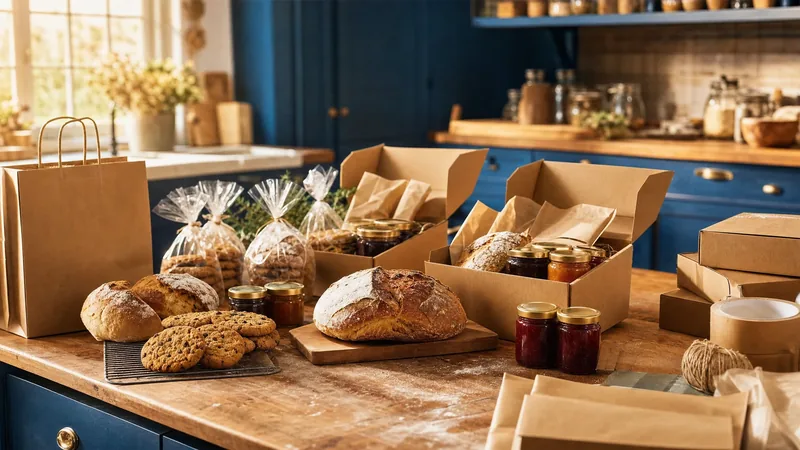
How to Start a Food Manufacturing Business in South Carolina: SCDA Registration
How to Start a Food Manufacturing Business in South Carolina: SCDA Registration
If you plan to make sauces, seasonings, packaged baked goods, or other food products and sell them beyond your own kitchen, the South Carolina Department of Agriculture (SCDA) is the agency you need to satisfy. Retail food permits in South Carolina come from SCDA, not from DHEC, which was split in 2024. Many first-time food makers assume that a Secretary of State filing is their food license. It is not. The Secretary of State creates your legal entity. It does not authorize you to manufacture or sell food.
This guide walks through the order we recommend: decide which product category you fall into, form your business, complete your tax and local registrations, and then apply to SCDA. It is informational content, not legal or tax advice, so read the disclaimer at the end before you rely on any of it.
What You Need Before You Start
Gather these items before you file anything. Most delays happen when an application arrives without a complete recipe or label draft.
- A finished recipe with exact ingredient weights, written so the same batch can be reproduced by someone other than you.
- An ingredient list in descending order by weight, plus every allergen you will need to declare on the label.
- A written description of your production process, from receiving raw ingredients through cooking, cooling, packing, and storage.
- A decision on where you will produce: a home kitchen or a separate non-home facility.
- Your legal business name and, if you form an LLC, a South Carolina registered agent with a street address.
- A federal Employer Identification Number (EIN) from the IRS, which costs nothing to obtain.
- Draft labels for each product showing the product name, net weight, your business name and address, and the ingredient statement.
- A budget that covers the state, local, and SCDA fees described below, plus equipment, packaging, and insurance quotes.
Step 1: Decide Which Category Your Product Falls Into
South Carolina treats food businesses differently depending on what you make, where you make it, and who buys it. Sort your plans into one of three groups before you do anything else.
- Cottage food from a home kitchen. Cottage rules allow certain low-risk foods to be made at home and sold directly to customers. South Carolina's home-based food law has no annual sales cap and no registration requirement, but it limits which products qualify and how they are labeled and sold, so confirm the current rules with SCDA before you bake at home for resale.
- Wholesale manufactured food from a non-home facility. Sauces, packaged baked goods for resale beyond cottage rules, and similar products sold to retailers, distributors, or the public through channels that go past cottage rules need an SCDA Registration Verification Certificate. They must also be produced in a non-home facility and go through label review.
- Meat and poultry. Products containing meat or poultry are handled by Clemson's SC Meat-Poultry Inspection Department, not by the general SCDA food process. Do not assume a sausage or chicken product follows the same path as a sauce.
If your product sits between categories, write a one-page product description and ask SCDA which path applies before you buy equipment or sign a lease.
Step 2: Choose Your Production Facility
A home kitchen works for cottage food. For wholesale production, you need a non-home facility. Most first-time producers either rent time in a shared-use commercial kitchen or lease a small commercial space with a food-grade prep area.
Before you sign anything, ask the landlord or kitchen operator whether the space is set up for the type of food manufacturing you plan to do, and confirm the zoning with your city or county planning office. Ask SCDA what facility features it expects to see, such as handwashing sinks, cleanable surfaces, and separate storage. A shared kitchen can save you the cost of build-out, but you still need to know whether its registration covers your products.
Step 3: Form Your Business Entity
You can operate as a sole proprietor or general partnership without filing organizing documents with the South Carolina Secretary of State. Many food makers choose a limited liability company (LLC) to separate personal and business liability. The steps for an LLC are:
- Check the name. The name must include the words limited liability company or limited company, or an abbreviation such as LLC, L.L.C., LC, or L.C. It must also be distinguishable from names already on file with the Secretary of State.
- Reserve the name if you need time. A name reservation costs $25 and lasts 120 days. It cannot be renewed, so file the Articles of Organization before it expires.
- File the Articles of Organization. The filing fee is $110. Use Business Entities Online at businessfilings.sc.gov. Online filings are returned within 24 to 48 business hours. Mailed and in-person filings take longer, and the Secretary of State does not publish a mail turnaround window.
- Name a registered agent. South Carolina requires every LLC to maintain an agent for service of process at a South Carolina street address. The agent must be a South Carolina resident individual, a domestic corporation, another LLC, or an authorized foreign entity. The agent's name and address must appear on the formation document.
A standard LLC does not file an annual report with the Secretary of State, and the Secretary of State lists no franchise or annual tax for it. An LLC that elects to be taxed as a corporation follows different rules, so ask your CPA before making that election. Corporations file Articles of Incorporation with a $110 filing fee and a Form CL-1 Initial Annual Report with a one-time $25 License Fee.
If you plan to sell under a name other than your legal name, such as a brand name for your sauce, South Carolina does not have a state-level DBA filing. The Secretary of State does not register DBAs. List the trade name on your local business license, and list it as a trade name on your EIN application and your SCDOR Business Tax Application. The state's guidance is available at scbos.sc.gov. There is no separate local DBA recording or fee.
Step 4: Get Your EIN and SCDOR Retail License
Apply for an EIN from the IRS before you open a bank account, hire anyone, or register with the state. Then register through the South Carolina Department of Revenue (SCDOR) using the Business Tax Application on MyDORWAY. Selling tangible goods, which covers most food products, requires a Retail License. The license is a one-time, nonrefundable $50 fee per location, and you can apply at dor.sc.gov.
The Retail License is what makes you a registered seller, but it does not tell you what to charge sales tax on. The state sales tax rate is 6 percent, and some food products are taxed differently from others. Ask SCDOR which of your products are taxable and how to handle sales to resellers before your first invoice goes out.
Step 5: Obtain Your Local Business License
South Carolina has no general statewide business license. Secretary of State registration is not a business license. Most cities levy a business license tax, and nine counties do as well: Beaufort, Charleston, Dorchester, Horry, Jasper, Marion, Orangeburg, Richland, and Sumter.
Local licenses run on a May 1 to April 30 license year, and renewals are due April 30. Renew at localblrenewal.com when your jurisdiction uses that system. Call your city or county before you open to confirm the classification that fits a food manufacturer, because the same operation can be classified differently in different places.
Step 6: Apply for the SCDA Registration Verification Certificate
For wholesale food made outside the home, the SCDA Registration Verification Certificate is the core approval. Contact SCDA's food safety staff before you submit, describe your product and facility, and ask what documentation they need. Ask for the current application form, the fee, and the processing timeline in writing. Confirm each of these figures with SCDA directly, because the agency sets them and they can change.
Expect SCDA to ask about your facility, your process, and your product formulation. Have your recipe, process description, and facility address ready. Incomplete submissions are the most common reason an application stalls.
Step 7: Submit Your Labels for Review
Wholesale food requires label review, so do not print packaging until SCDA has reviewed your labels. Your label should include the product name, net weight, your name and address, the ingredient statement in descending order by weight, and allergen declarations. Keep health and disease claims off the label, because those statements can move a product into drug territory and draw federal attention.
Send your label drafts early, and expect at least one round of revisions. Build the review time into your launch schedule, and do not commit to a retailer ship date until your labels are approved.
Step 8: Check Whether Meat or Poultry Is Involved
If your product contains meat or poultry, contact Clemson's SC Meat-Poultry Inspection Department before you start. Its requirements are separate from SCDA's food process. Ask whether your product type, your facility, and your labeling fall under its program, and get the answer in writing before you commit to a recipe or a production site.
Step 9: Consider the Certified SC Grown Program
Certified SC Grown is a separate state program for products made with South Carolina ingredients or produced in the state. Participation is voluntary, and it is a marketing tool, not a substitute for SCDA registration. Check its current eligibility rules and any fees with SCDA before you put the logo on your packaging, and confirm that your ingredient sourcing meets the standard you plan to claim.
Step 10: Plan for Ongoing Compliance
Registration is not a one-time event. Put these dates on your calendar:
- April 30: Local business license renewal, if your city or county is one of the jurisdictions that levies it.
- Before any change: Ask SCDA whether a new ingredient, a new product, a new facility, a change of owner, or a change of address requires notice or a new approval.
- Ongoing: Keep your SCDOR Retail License current, and file sales tax returns on the schedule SCDOR assigns to you.
- Each renewal cycle: Confirm the SCDA renewal period and fee with the agency, since those terms are not set out here.
Common Mistakes to Avoid
- Treating the Secretary of State filing as your food license. Forming an LLC does not authorize you to sell food. It is only one part of the process.
- Selling wholesale from a home kitchen. Cottage rules cover a narrow set of products and sales channels. Going beyond them from a home kitchen can put your business out of compliance.
- Printing packaging before label review. A label change after printing means reprinting, and the cost falls on you.
- Letting the name reservation expire. A reservation lasts 120 days and cannot be renewed. Filing late can cost you the name.
- Skipping the local license. A state Retail License does not replace the city or county license, and nine counties levy their own tax on businesses in their unincorporated areas.
- Using a brand name without recording it. Since South Carolina has no state DBA, the trade name entries on your local business license, EIN and SCDOR records are the steps that matter.
- Making health claims. Words like cures, treats, or prevents can change how regulators view your product. Describe flavor, ingredients, and preparation instead.
- Assuming meat and poultry follow the same path. Clemson's program is a separate track, and mixing up the two can cost months.
What Results to Expect
A complete registration may allow you to sell to retailers, distributors, and customers who ask for proof that your business is registered with the state. It does not guarantee that any buyer will place an order, and it is not an endorsement of your product's quality by SCDA. Treat registration as the entry requirement for wholesale sales, then focus on pricing, distribution, and customer relationships.
Owners who file in the order above and ask SCDA questions before spending money are generally less likely to redo steps. That outcome depends on your product, your facility, and how quickly the agencies respond, so build flexibility into your launch date.
Summary of Costs
| Item | Cost | Where to confirm |
|---|---|---|
| LLC Articles of Organization | $110 filing fee | Secretary of State |
| Name reservation (optional) | $25 for 120 days, nonrenewable | Secretary of State |
| SCDOR Retail License | $50 one-time per location | SC Department of Revenue |
| Local business license | Varies by city or county | Your city or county |
| SCDA Registration Verification Certificate | Confirm with SCDA | SC Department of Agriculture |
| SCDA label review | Confirm with SCDA | SC Department of Agriculture |
| Meat and poultry inspection | Confirm with the program | Clemson SC Meat-Poultry Inspection Department |
Where to Get Help
The South Carolina Small Business Development Centers (SC SBDC) offer free advising to new business owners, and you can find their services at scsbdc.com. The U.S. Small Business Administration's South Carolina district page at sba.gov lists local resources. For questions about the Secretary of State filings, use sos.sc.gov. For tax registrations, start at dor.sc.gov.
Important Disclaimer
This article is informational content about forming a business and registering a food manufacturing operation in South Carolina. It is not legal, tax, or regulatory advice. Fees, deadlines, and program rules change, and this guide may not reflect the latest version of any requirement. Confirm every fee and timeline with the South Carolina Department of Agriculture, the Secretary of State, the SC Department of Revenue, Clemson's SC Meat-Poultry Inspection Department, and your local government before you act. For entity choice, contracts, and liability questions, consult a qualified South Carolina attorney. For tax elections and sales tax treatment of your products, consult a qualified CPA.
Keep exploring: related South Carolina guides
- South Carolina Cottage Food Law
- How to Start a Food Truck in South Carolina
- How to Start a Coffee Shop Business in South Carolina
- How to Start a Vending Machine Business in South Carolina
- How to Get a Liquor License in South Carolina
- How to Start an LLC in South Carolina
- South Carolina Business License
- How Much Does It Cost to Start a Business in South Carolina
- All South Carolina business types
- Every South Carolina guide in one place