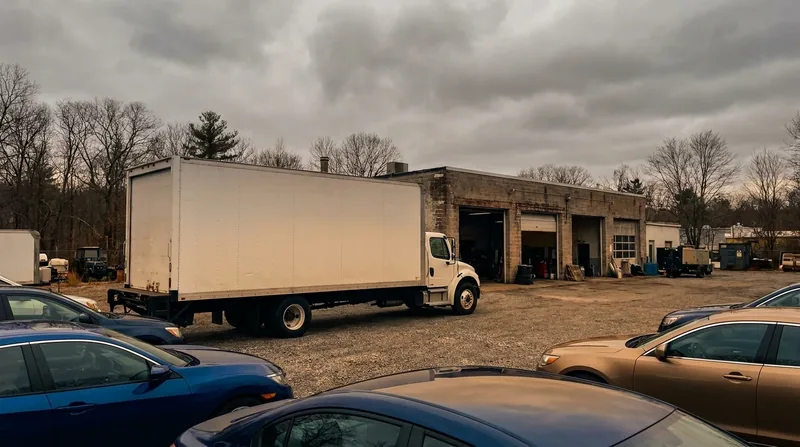
How to Start a Medical Courier Business in South Carolina
How to Start a Medical Courier Business in South Carolina
Clinics, labs, pharmacies, and hospitals in South Carolina need specimens, prescriptions, records, and equipment moved on tight schedules, and they pay for drivers who handle that material correctly. If you want to know how to become a medical courier in SC, this guide walks through the state filings, the vehicle and insurance layer, the federal rules that apply to patient information and specimens, and the paperwork to finish before your first run.
This article is informational content, not legal or tax advice. Rules change, and the agencies named here are the final authority on their own requirements. Talk with a South Carolina business attorney and a CPA before you choose a structure, sign client contracts, or hire drivers.
Medical Courier Requirements in South Carolina: The Short Answer
South Carolina does not issue a state medical courier license. There is also no general statewide business license. Your state obligations come from how you form the business, how your vehicles operate, and how you handle patient information. Most of the substantive medical courier requirements in South Carolina come from federal rules and from the vehicle and local licensing layers covered below. In summary, you will need to:
- Register your entity and name with the South Carolina Secretary of State if you form an LLC or corporation.
- Obtain a local business license from your city or county, since most cities levy one and nine counties do as well.
- Obtain an SCDMV Certificate of Compliance if your operation is an intrastate for-hire property carrier.
- Sign HIPAA business associate agreements with every clinic or lab whose patient information you handle.
- Complete OSHA bloodborne pathogen training and the DOT and IATA training that applies to specimen shipments.
What You Need Before You Start
- A business name that is available on South Carolina Secretary of State records
- An EIN from the IRS, which you can apply for online
- A registered agent with a South Carolina street address, if you form an LLC
- Vehicles registered and insured for commercial use, with temperature control and secure cargo space suited to your specimens
- A written service agreement with each clinic, lab, or pharmacy
- A signed HIPAA business associate agreement for each client that shares protected health information
- A written bloodborne pathogens exposure control plan and training records for every driver
- Chain-of-custody, delivery, and temperature log templates
- Quotes for commercial auto and general liability insurance
- A startup budget that covers filing fees, the SCDMV certificate, insurance, training, and several months of operating costs
Step-by-Step: How to Become a Medical Courier in SC
Step 1: Define the services you will offer
Specimen transport, pharmacy delivery, records runs, and durable medical equipment delivery each carry different packaging, training, and insurance needs. Specimens are where DOT and IATA shipping rules matter most, and where the most training cost sits. Any work that involves patient records brings HIPAA obligations with it. Write a service list before you buy a vehicle or sign a client, because the list determines your insurance limits, your training plan, and whether you need hazardous material handling.
Step 2: Choose a business structure
Your structure decides what you file with the state and how much personal liability you carry. Sole proprietorships and general partnerships do not file organizing documents with the Secretary of State at all. That makes them the simplest to start, but the owner is personally exposed to claims from clients and accidents on the road.
An LLC is the most common choice for a courier business. Articles of Organization for a domestic LLC are filed under S.C. Code Section 33-44-203, with a filing fee of $110. A standard LLC does not file an annual report, and the South Carolina Department of Revenue (SCDOR) states that an LLC not taxed as a corporation is not required to pay the corporate License Fee. An LLC that elects corporate tax treatment must file Form CL-1 with a one-time $25 initial License Fee within 60 days of commencing business, then file its annual report with the SC1120 or SC1120S and pay an annual License Fee of 0.1 percent of capital and paid in surplus plus $15, with a $25 minimum.
A corporation files Articles of Incorporation for a domestic business corporation under S.C. Code Section 33-2-102, with the same $110 filing fee and the Form CL-1 filed alongside. Corporations pay South Carolina corporate income tax of 5 percent on taxable income and file their annual report as Schedule D with the SC1120 or SC1120S. Corporate structures add paperwork, so compare them with your CPA before choosing one.
If you form an LLC, South Carolina law under S.C. Code Section 33-44-108 requires you to maintain a registered agent and office in the state for service of process. The agent must be an individual South Carolina resident, a domestic corporation, another LLC, or an authorized foreign corporation or company. The agent's name and address must appear on the formation document. If the agent changes later, you file a statement of change with the Secretary of State.
Online filing through Business Entities Online at businessfilings.sc.gov is the fastest route. The Secretary of State's Business One Stop reports that documents filed online are returned within 24 to 48 business hours. Mailed and in-person filings take longer, and no mail turnaround window is published. The Secretary of State does not publish a separate expedite fee for business entity filings.
Step 3: Check and reserve your business name
Under S.C. Code Section 33-44-105, an LLC name must include the words limited liability company or limited company, or an abbreviation such as LLC, L.L.C., LC, or L.C. Limited is abbreviated as Ltd. and company as Co. The name must be distinguishable on the Secretary of State's records from other registered names and from reserved or registered names. Search the business entity search before you settle on a name.
If you need time to finish paperwork, you can reserve a name for 120 days for $25. The reservation cannot be renewed. If your chosen name is too close to an existing one, you can file an Application for Use of an Indistinguishable Name for $10, or file the other company's written consent.
Your name must match the Secretary of State record exactly, including punctuation, spacing, and abbreviations such as LLC versus L.L.C. Insurance certificates, bank accounts, SCDOR registrations, SCDMV paperwork, and client contracts all reference that name. A mismatch creates delays with every one of them, so copy the name directly from the filed record.
Step 4: Get your EIN and handle any trade name
Apply for an EIN with the IRS before you open a business bank account or register with SCDOR. South Carolina has no state-level DBA filing. The Secretary of State does not register DBA or trade names. There is no separate DBA filing: list the trade name on your local business license, and list the trade name on your IRS EIN application and on the SCDOR Business Tax Application. Details are available from the South Carolina Business One Stop at scbos.sc.gov.
Step 5: Obtain your local business license
South Carolina has no general statewide business license, and Secretary of State registration does not replace one. Most cities levy a local business license tax. Nine counties also levy one: Beaufort, Charleston, Dorchester, Horry, Jasper, Marion, Orangeburg, Richland, and Sumter. Local licenses run on a May 1 to April 30 license year and are due April 30. Renewals are handled at localblrenewal.com.
Apply where your business is physically located. If you operate from home or from a vehicle without a fixed office, ask the city or county whether you still need a license and where the business is deemed located. Fees vary by jurisdiction, so confirm the amount with the local office before you budget.
Step 6: Get the SCDMV Certificate of Compliance
Any intrastate for-hire property carrier operating in South Carolina needs an SCDMV Certificate of Compliance. A courier who carries specimens, pharmacy orders, or equipment for paying clients may fall into that category, so confirm your status with the South Carolina Department of Motor Vehicles (SCDMV) before your first paid run. The first application fee is $25. Renewals are free.
Your insurer files Form E with SCDMV on your behalf, so your insurance must be in place before the certificate can be issued. Minimum liability limits depend on the vehicle:
- $300,000 for vehicles under 10,000 pounds gross vehicle weight rating (GVWR)
- $750,000 for vehicles at 10,000 pounds GVWR or more
- $5 million for carriers transporting hazardous materials
Ask SCDMV whether your vehicle weight, driver licensing, or cargo type triggers any additional registration or licensing requirements. Ask SCDMV for its current timeline before you schedule your launch.
Step 7: Buy the right insurance
Commercial auto liability is the foundation, and it must meet at least the SCDMV limits above for your vehicle class. Most courier businesses also carry general liability coverage for on-site incidents and cargo or property coverage for specimens and equipment in transit. Ask your broker whether a cyber or professional liability policy makes sense if you handle electronic records. Give the broker your exact service list from Step 1, because a policy written for general delivery may not cover specimen handling.
Once you hire employees, confirm your workers' compensation obligations with your insurer and with the state before the first employee starts driving.
Step 8: Sign HIPAA business associate agreements
A courier that handles protected health information on behalf of a clinic, lab, or pharmacy is a business associate under HIPAA. Sign a business associate agreement (BAA) with each client before your first run that involves patient information, not after. The agreement should spell out how you may use the data, how you will safeguard it, and how you will report a breach.
Your written policies should cover practical risks: locked cargo areas, encrypted phones and tracking apps, no leaving paper manifests in unattended vehicles, secure disposal of outdated records, and a breach response plan with named responsibilities. Train every driver on those policies at hire and keep signed acknowledgments on file.
Step 9: Complete OSHA bloodborne pathogen training
Drivers who transport specimens may be exposed to blood and other potentially infectious materials, so the OSHA bloodborne pathogens standard applies to your operation. Write an exposure control plan that describes which tasks carry exposure risk, what protective equipment you provide, how you handle sharps and spills, and how you respond to an exposure incident. Train each employee at hire and at least annually, offer the hepatitis B vaccination, and keep training records. Keep a spill kit and sharps containers in every vehicle.
Step 10: Learn the DOT and IATA rules for specimens
Shipping biological specimens is governed by DOT rules for ground transport and IATA rules for air transport. These cover how specimens are classified, packaged, marked, labeled, and documented, and when hazardous materials training is required for the people who prepare or carry them. A packaging error can cause a lab to reject a shipment, delay patient results, or create a hazardous incident. Confirm your specimen categories and packaging standards with the U.S. Department of Transportation and IATA, and document the training each handler completes.
Step 11: Register for taxes and classify your drivers carefully
Register your business with SCDOR through the Business Tax Application on MyDORWAY. If you hire employees, confirm your withholding registration requirements with SCDOR before the first payroll. Whether a driver is an employee or an independent contractor depends on how much control you exercise over the work, not on what the contract calls them. Misclassification is one of the most expensive mistakes a delivery business can make, so have your CPA or attorney review your driver agreements before you engage anyone.
If you sell tangible goods, such as supplies or equipment, you may need an SCDOR Retail License. The fee is a one-time, nonrefundable $50 per location, applied for through the same Business Tax Application. Courier services alone are not retail sales, so ask SCDOR whether your billing structure requires the license.
Step 12: Set up operations before launch
Build your operating system before the first client goes live. Create chain-of-custody forms that record every hand-off, temperature logs for each run, proof-of-delivery records, and a dispatch process that tracks pickup and drop-off times. Write service-level terms into each client agreement, including turnaround times, pickup windows, and what happens when a delivery is late. Keep copies of every log for the retention period your clients require.
Common Mistakes to Avoid
- Name mismatches. Filing a name that differs from the Secretary of State record, then discovering the error on insurance certificates and bank accounts.
- Starting paid runs before the SCDMV certificate. Confirm your status and get the certificate before taking money for transport.
- Signing clients without BAAs. Accepting patient information from a clinic before the business associate agreement is signed.
- Treating a Secretary of State filing as a business license. The state filing does not satisfy your local license obligation.
- Using a trade name without listing it on your records. South Carolina has no state DBA filing, so the trade name entries on your local business license, EIN and SCDOR records are the ones that matter.
- Buying minimum coverage without asking questions. A generic delivery policy may not cover specimen handling or cargo in transit.
- Skipping annual training. OSHA training records are one of the first things an inspector or a client auditor asks for.
- Misclassifying drivers. A contract label does not control how the state or the IRS will treat a worker.
- Guessing on specimen packaging. Shipping rules are specific, and a single packaging error can ruin a route.
Fees and Timelines at a Glance
| Item | Cost | Timing or notes |
|---|---|---|
| LLC Articles of Organization (S.C. Code Section 33-44-203) | $110 | 24 to 48 business hours when filed online |
| Corporation Articles of Incorporation with Form CL-1 | $110 plus $25 initial License Fee | CL-1 due within 60 days of commencing business |
| Name reservation | $25 | 120 days, nonrenewable |
| Application for Use of an Indistinguishable Name | $10 | Or file the other entity's written consent |
| SCDMV Certificate of Compliance, first application | $25 | Insurer files Form E; confirm timing with SCDMV |
| SCDMV Certificate of Compliance, renewal | Free | Confirm renewal schedule with SCDMV |
| SCDOR Retail License, if you sell tangible goods | $50 one-time, nonrefundable, per location | Applied for through the Business Tax Application |
| Local business license | Set by your city or county | May 1 to April 30 license year, due April 30 |
What to Expect After You Launch
A compliant courier business can be positioned to bid for recurring clinic, lab, and pharmacy routes, because many health care buyers screen vendors for documented training, insurance, and BAAs. Keep those records ready to share. Results depend on your market, your pricing, your reliability, and your competition, so no particular volume of work or revenue can be promised. Build your first month around a small number of accounts, track on-time performance and exceptions, and expand routes only after your logs show your process is working.
Expect the filing side to move in days if you file online and your name is clear. The SCDMV certificate, local licensing, and insurance placement usually take longer, so start those steps early. Plan your launch date around the slowest item on your list, not the fastest.
Next Steps
Start with the name search and the entity decision, since every other filing depends on them. Then confirm your SCDMV status, line up insurance, and sign BAAs before you accept patient-related work. Visit the South Carolina Secretary of State business entities page for filing guidance, the South Carolina Department of Revenue for tax registration, and the South Carolina Small Business Development Centers for free counseling on planning and financing. The SBA South Carolina district page lists local resources as well. For structure, tax, driver classification, and contract questions, consult a qualified South Carolina attorney and CPA before you commit.
Keep exploring: related South Carolina guides
- How to Open a Med Spa in South Carolina
- How to Start a NEMT Business in South Carolina
- How to Start a Massage Therapy Business in South Carolina
- How to Open an Assisted Living Facility (CRCF) or Adult Day Care in South Carolina
- How to Start an LLC in South Carolina
- South Carolina Business License
- How Much Does It Cost to Start a Business in South Carolina
- All South Carolina business types
- Every South Carolina guide in one place