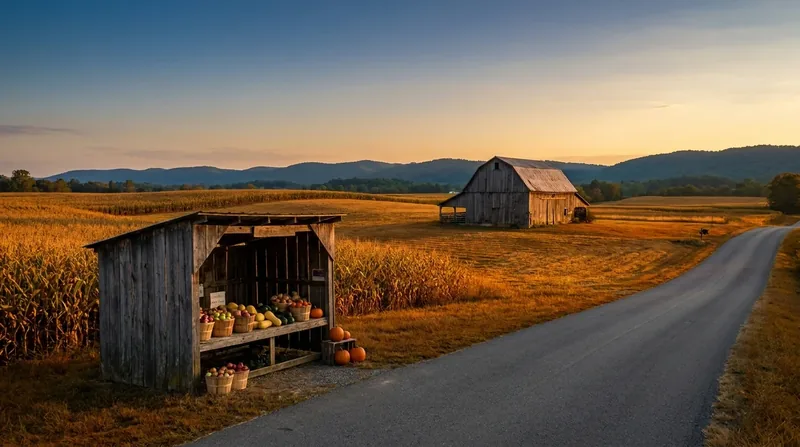
How to Start an Agritourism or U-Pick Farm in South Carolina
How to Start an Agritourism or U-Pick Farm in South Carolina
A U-pick field or farm stand can turn working farmland into a second income stream, and South Carolina has a strong base of families who want to pick their own peaches, strawberries, and pumpkins. The paperwork is manageable, but it is spread across several agencies, and each one asks for something different. This guide walks through the steps in the order most farm owners find easiest, with the current costs and deadlines for each.
Disclaimer: This article is informational content, not legal or tax advice. Liability, tax exemption, and food permit rules depend on your specific operation. Talk with a qualified attorney and a CPA before you choose a structure or finalize your visitor contracts, and confirm current requirements directly with the agency named in each section.
What You Need Before You Start
Gather these items before you file anything. Several take time to get, and some have to be in place before you can complete the next step.
- A business name, checked against Secretary of State records to confirm nobody else holds it
- A decision on business structure: sole proprietorship, LLC, or corporation
- A federal Employer Identification Number (EIN) from the IRS
- A list of the cities and counties where your farm sits, since South Carolina has no statewide business license
- A South Carolina Department of Revenue (SCDOR) account through the Business Tax Application on MyDORWAY
- A list of every product you plan to sell, so you can separate raw produce from prepared or processed foods
- Warning signs for the farm entrance, with letters at least 1 inch tall
- A written visitor contract or waiver that includes the liability warning
- Acreage records and crop history for the agricultural tax questions
- A general liability insurance quote from an agent who writes farm policies
Step 1: Define Your Operation in Writing
Agritourism covers a wide range of activities. A single farm might run a U-pick field, a farm stand, a pumpkin patch, a hayride, a petting area, and a few seasonal events. Each one can raise different permit questions, insurance needs, and liability exposure. Write a one-page description that covers what you will offer, when each activity runs, how many visitors you expect on a busy weekend, and where parking and restrooms will be.
Crop choice drives much of that plan. Peaches, strawberries, and pumpkins are classic U-pick crops, but their harvest windows are very different. A strawberry field may run for several weeks in spring, while a pumpkin patch peaks in the fall. Each season has its own staffing, parking, and insurance profile, so decide early which crops you will open to the public.
Step 2: Choose a Business Structure
Your structure determines which state filings you owe. South Carolina treats the options very differently:
| Structure | Filing with the Secretary of State | Cost | Ongoing state filing |
|---|---|---|---|
| Sole proprietorship | None. Sole proprietors do not file organizing documents with the state. | No state filing fee | None at the Secretary of State level |
| General partnership | None | No state filing fee | None at the Secretary of State level |
| LLC | Articles of Organization under S.C. Code Section 33-44-203 | $110 | No annual report required for a standard LLC |
| Corporation | Articles of Incorporation filed with Form CL-1 Initial Annual Report | $110 filing fee plus a one-time $25 initial License Fee | Annual report filed with the SCDOR income tax return |
Many farm owners choose an LLC because it can separate the farm's business obligations from personal assets. That separation depends on how you run the business, though, so treat it as a question for your attorney rather than a guarantee.
If you form an LLC, file through Business Entities Online at businessfilings.sc.gov. Documents filed online are returned within 24 to 48 business hours. The Secretary of State does not offer a separate expedite fee, and mailed or in-person filings take longer. Your LLC name must include the words limited liability company or limited company, or an abbreviation such as LLC, L.L.C., LC, or L.C. You must also name a registered agent with a South Carolina street address. The agent can be a South Carolina resident, a domestic corporation, or an authorized foreign entity.
If you want to hold a name while you finish paperwork, you can reserve it for $25. A reservation lasts 120 days and cannot be renewed, so file the formation documents before it expires.
Step 3: Register Your Trade Name (DBA)
Most U-pick farms operate under a farm name that differs from the legal owner's name, which makes it a DBA, or trade name. South Carolina does not register DBAs at the state level. The Secretary of State states that its office does not register DBA or trade names. Instead, record the name with your county or municipality, usually on your local business license. Then list the trade name on your IRS EIN application and on the SCDOR Business Tax Application. The South Carolina Business One Stop explains the process at scbos.sc.gov.
Because the fee depends on the county or municipality, ask the local office for the exact amount before you assume there is none.
Step 4: Check Your Local Business License
South Carolina has no general statewide business license. Registering with the Secretary of State is not a business license. Local license taxes are the main obligation, and they come from two places: most cities, and nine counties. Those counties are Beaufort, Charleston, Dorchester, Horry, Jasper, Marion, Orangeburg, Richland, and Sumter.
Local licenses run on a May 1 to April 30 license year and are due April 30. Renewals are handled at localblrenewal.com, a service of the South Carolina Revenue and Fiscal Affairs Office. If your farm sits inside a city limit, expect a city license obligation. If it sits in one of the nine counties, expect a county obligation. If neither applies, call the county to confirm that nothing is owed before you skip this step.
Step 5: Set Up Your SCDOR Account and Retail License
Apply for your business tax account through the Business Tax Application on MyDORWAY, the SCDOR's online portal. Sellers of tangible goods must obtain a Retail License. The fee is a one-time, nonrefundable $50 per location. Apply at dor.sc.gov.
Whether this applies to your fresh produce sales is a question to confirm with the SCDOR. Prepared goods such as jams, baked goods, or gift items clearly fall under the rule. The state general sales tax rate is 6%. Sales tax treatment for produce and prepared foods differs, so ask the SCDOR how it applies to each product on your list before opening your stand.
Step 6: Handle Food Permits Through SCDA
Retail food permits come from the South Carolina Department of Agriculture (SCDA). Older guides and forms still name DHEC, but food permitting is no longer handled there, so check with SCDA before you open.
A farm stand selling raw produce needs no permit. Prepared or processed items follow the retail food or cottage food rules. Some low-risk items, such as jams and jellies and boiled peanuts, are exempt from a retail food permit, and home-made baked goods sold under the cottage food law need no permit or registration, while other prepared foods do need a permit. Ask SCDA which rule covers each product before you sell it, and keep your product list current if you add new items later.
Step 7: Post the Liability Warning and Use It in Contracts
South Carolina's agritourism liability statute, S.C. Code Section 46-53, gives farm operators a defense against certain claims, but only if they follow its requirements. Two requirements are central:
- Post at least one warning sign at the entrance. The letters must be 1 inch or taller.
- Include the warning in every written contract with a visitor. The statute ties immunity to this step.
Get the exact warning wording from the statute itself, not from a summary or a template you found online, and have your attorney review your sign and contract language. The statute is not a substitute for insurance. Ask your agent how your general liability policy treats hayrides, play areas, and events, since those activities often carry the most exposure.
Step 8: Apply for the Farm Tax Exemption and Check Property Tax
The SC Agricultural Tax Exemption, known as the SCATE card, is run by the SCDA with the SCDOR. It is issued for three years and is available only to business farms. A backyard grower doing it as a hobby should not expect to qualify. Use the card to buy qualifying farm items without paying sales tax at the register, and confirm eligible purchases with SCDA or the SCDOR before you rely on it for a specific item.
Agricultural use property tax is a separate question. Land that qualifies for agricultural use can be assessed differently from other property, but eligibility depends on how the land is used. Ask your county assessor whether your acreage qualifies and how U-pick activity, parking areas, events, and structures affect it. Keep your acreage records and crop history ready, because the assessor will likely ask for them.
Step 9: Decide Whether to Pursue Certified SC Grown
Certified SC Grown is a state program that lets qualifying producers use a recognized South Carolina marketing mark. It is optional, but it can help visitors identify local product on your stand and in your signage. Contact SCDA about its requirements before you print any logo or label, and do not assume your current products meet the standard.
Step 10: Plan Any Construction Carefully
Many U-pick farms add a pavilion, restrooms, a parking pad, or a packing shed. Hiring the right contractor matters. In South Carolina, commercial contractor licenses start above $10,000, and residential specialty registration starts above $500. Confirm each contractor's license and registration status before you sign, and ask for proof rather than relying on a verbal assurance.
Expected Results
A U-pick farm can draw visitors during its harvest season, and some farms see families return each year once they have a good experience. Results depend on your location, crop, weather, pricing, and marketing, so no timeline or revenue figure can be promised. Many first-season farms spend the year learning how visitors move through the field, where bottlenecks form at checkout, and which crops draw the most traffic.
When you describe your produce, keep your statements factual and limited to what you can support. Avoid health or medical claims about fruit, and check any specific product claim with SCDA before you publish it.
Common Mistakes to Avoid
- Assuming South Carolina has a statewide business license. It does not, but many local licenses still apply.
- Looking for a state DBA filing. Record your trade name with the county or city and on your tax and EIN applications.
- Forming an LLC without checking the local license. The state filing does not replace it.
- Posting a warning sign that is too small, or leaving the warning out of visitor contracts. Both can undermine the statute's protection.
- Calling DHEC about food permits. Food permits now come from SCDA.
- Selling prepared foods without asking SCDA which permit applies.
- Treating the SCATE card as a personal discount. It is for business farms only.
- Hiring an unlicensed contractor for a structure above the license thresholds.
- Waiting until harvest to start filings. Local licenses are due April 30, and the Secretary of State filing and the SCDOR account should be done before opening day.
Practical Tips
- Build a one-page checklist with the agency, deadline, and contact for each item. Review it every January.
- Keep a single folder with your formation documents, EIN letter, licenses, signed contracts, sign photos, and acreage records.
- Set visitor prices and policies in writing, including how you weigh or count picked produce, and post them at the entrance.
- Plan parking, restrooms, and water before you advertise. Visitor volume often outruns what a new farm expects.
- Ask your county assessor, insurance agent, and SCDA contact for written answers on the questions that matter most to your operation.
Official Resources
- South Carolina Secretary of State, Business Entities: sos.sc.gov/online-filings/business-entities
- Business Entities Online: businessfilings.sc.gov
- South Carolina Department of Revenue: dor.sc.gov
- Local business license renewals: localblrenewal.com
- South Carolina Small Business Development Centers: scsbdc.com
- U.S. Small Business Administration, South Carolina: sba.gov/district/south-carolina
Agency staff can answer questions about your specific product mix and location. Before you sign a lease, buy land, or commit to a construction project, talk with a qualified attorney or CPA who can review your structure, contracts, and tax position.
Keep exploring: related South Carolina guides
- How to Start a Short-Term Rental Business in South Carolina
- How to Start an Airbnb in Charleston, SC
- How to Start a Golf Cart Rental Business in South Carolina
- How to Start an Airbnb in Folly Beach, Isle of Palms or Sullivan's Island
- How to Start an LLC in South Carolina
- South Carolina Business License
- How Much Does It Cost to Start a Business in South Carolina
- All South Carolina business types
- Every South Carolina guide in one place