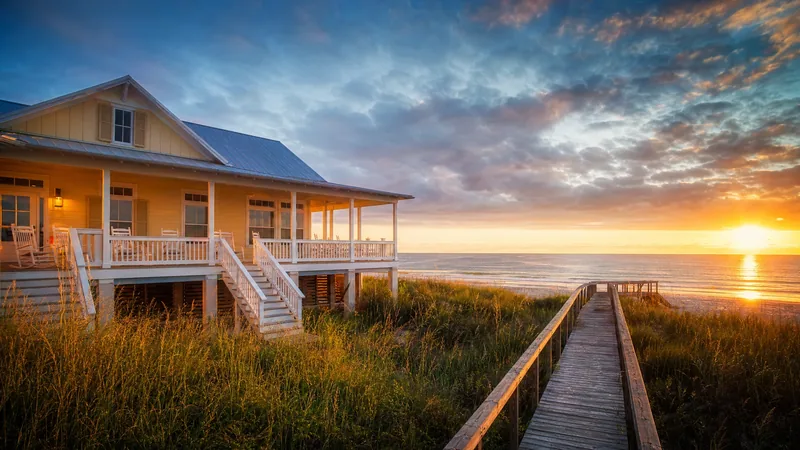
How to Start an Airbnb on Hilton Head Island: STR Permit and Taxes
How to Start an Airbnb on Hilton Head Island: STR Permit and Taxes
Hilton Head Island is one of South Carolina's busiest vacation rental markets, and the Town of Hilton Head Island regulates it closely. If you want to list an Airbnb here, you need a Town short-term rental permit for each property, a Town business license, and a plan for the lodging taxes you will collect. These come from different offices with different deadlines, so the order you handle them in matters. This guide walks through that order.
This article is informational, not legal or tax advice. Short-term rental rules, fees, and tax rates change, and your property's deed restrictions, HOA or POA covenants, and zoning can change the answer. Confirm current requirements with the Town of Hilton Head Island and the South Carolina Department of Revenue, and talk with a qualified South Carolina attorney or CPA before you accept your first booking.
What You Need Before You Start
Gather these items before you apply. Most delays come from one missing document, not from the rules themselves.
- Proof that you own the property, or a signed lease and the owner's written permission to list it
- The exact property address and the number of bedrooms, because the Town permit fee is charged per bedroom
- A site plan showing your parking layout, with up to 6 parking spaces
- A written approval letter from the HOA or POA, if the property is in one
- A completed fire safety checklist for the unit
- The name and phone number of a local agent who can be reached 24/7 and will respond within 1 hour
- An EIN from the IRS, and your business entity filing if you plan to form an LLC or corporation
- Your trade name, if you plan to list under one
Step 1: Decide Who Will Hold the Permit
The Town issues the Hilton Head short term rental permit to a person, not an entity. That one rule shapes how you should set up ownership, so settle it before you file anything with the state.
You have three common options in South Carolina:
- Sole proprietor. You operate in your own name. Sole proprietors and general partnerships do not file organizing documents with the Secretary of State at all.
- Limited liability company (LLC). Articles of Organization for a domestic LLC cost $110 and are filed through Business Entities Online at https://businessfilings.sc.gov/. Online filings are returned within 24 to 48 business hours. The name must contain the words limited liability company or limited company, or an abbreviation such as LLC, L.L.C., LC, or L.C. You must also maintain a registered agent in South Carolina, which must be an individual resident of the state, a domestic corporation, another LLC, or an authorized foreign entity.
- Corporation. Articles of Incorporation cost $110 and are filed together with Form CL-1 Initial Annual Report of Corporations, which carries a one-time $25 initial License Fee due within 60 days of doing business.
An LLC files no annual report with the Secretary of State. If you elect to have the LLC taxed as a corporation, the filings change, so ask your CPA. If you want to hold a name while you prepare your paperwork, a name reservation costs $25 and lasts 120 days, and it cannot be renewed.
Here is the catch. If the house sits inside an LLC, the Town permit is still issued to a person. Ask the Town how it handles entity-owned property before you form anything, and have an attorney review the ownership structure. Forming an LLC does not by itself change who the permit is issued to.
Step 2: Register a Trade Name if You Need One
South Carolina has no state DBA filing. The Secretary of State does not register DBA or trade names. Instead, record your trade name with your county or municipality, usually on your local business license. Then list the same name as a trade name on your IRS EIN application and your SCDOR Business Tax Application. The local fee varies, so confirm it with the office where you file. Limited partnerships and foreign corporations are the exception, since they may file an assumed or fictitious name with the Secretary of State.
Step 3: Open Your SCDOR Business Tax Account
Register through the SCDOR Business Tax Application on MyDORWAY at https://dor.sc.gov/. This account is how you report and remit the lodging taxes covered in Step 6.
Do not confuse this with the Retail License. The SCDOR Retail License is a one-time, nonrefundable $50 fee per location for sellers of tangible goods. SCDOR says hosts who rent directly need a Retail License to file and remit the lodging taxes, so confirm your situation with SCDOR. If you also sell merchandise, such as branded items or goods in the unit, you will likely need it for those sales.
Step 4: Apply for the Town Short Term Rental Permit
This is the core permit. The Town charges $150 per bedroom per year (2026 rate), and the permit is valid May 1 to April 30. A three-bedroom house would cost $450 per year at that rate. A $250 late fee applies if you are late, so put the April 30 end date on your calendar and confirm the exact renewal deadline with the Town.
Submit the documents from the checklist above with your application. Make sure the bedroom count matches what you will advertise. Also ask the Town how long review takes, because you should plan around a timeline the Town gives you in writing.
Once the permit is issued, its number must appear on every listing you publish, on every platform. Treat the permit number as required listing content, not an optional detail.
Step 5: Get the Town Business License
South Carolina has no statewide general business license. Registration with the Secretary of State is not a business license, so your rental also needs a local license from the Town. The Town's 2026-27 Class 1 business license is $48.60, plus $0.80 per $1,000. Ask the Town which base the per-$1,000 charge uses, because your total depends on it.
Beaufort County is one of the nine South Carolina counties that levy a local business license tax, on a May 1 to April 30 license year due April 30. The county license applies only in unincorporated areas, so a rental inside the Town needs the Town license rather than the county one.
Step 6: Plan for Lodging Taxes
Lodging taxes are where new hosts are most often surprised. Confirm each item below before you set your nightly rate.
| Tax or fee | Rate | Confirm with |
|---|---|---|
| State lodging tax | 7% | South Carolina Department of Revenue |
| Town accommodations and hospitality taxes | Set by the Town | Town of Hilton Head Island |
| Beach Preservation Fee | 2% | Town of Hilton Head Island |
The 7% state rate is higher than the 6% general state sales tax, so ask SCDOR how the 7% breaks down. The Town figures are not fixed in this guide, so get the current rates from the Town before you price anything.
Some booking platforms collect certain taxes for you and remit them. Find out exactly which taxes each platform collects and which you still report yourself. A platform that handles the state tax may not handle the Beach Preservation Fee or the Town's taxes, so do not assume coverage.
Step 7: Clear HOA and POA Rules
Many Hilton Head properties sit inside gated communities. Sea Pines and other POAs set their own short-term rental rules, and your Town permit does not override them. Get written approval rather than a verbal okay, and include the letter with your permit application if the property is in an association.
Read the covenants too. They may restrict rental minimums, parking, or the number of guests, and those limits affect how you set up your listing.
Step 8: Set Up Your Listing and Your Local Agent
Put the Town permit number on the listing before the listing goes live. Name a local agent who answers a phone line 24/7 and responds within 1 hour, because the Town requires that response standard. Keep the completed fire safety checklist on file so you can produce it if asked.
If you are considering a property in Bluffton instead, know that Bluffton has its own short-term rental permit at $325 per year. A Hilton Head permit does not cover Bluffton, and Bluffton's permit does not cover Hilton Head.
Tips and Common Mistakes
- Listing before the permit is issued. Keep the listing unpublished until the permit number exists.
- Miscounting bedrooms. The fee is per bedroom, so check how the Town counts a den, loft, or bonus room before you advertise it as a bedroom.
- Assuming an LLC changes the permit holder. It does not. Covered in Step 1.
- Treating Secretary of State registration as your business license. It is not. You still need the Town license.
- Missing the May 1 to April 30 cycle. A late application triggers a $250 late fee.
- Using a trade name without recording it locally. Listing the name on your EIN and SCDOR applications does not replace the local record.
- Pricing before taxes. Build the 7% state tax, the Town taxes, and the 2% Beach Preservation Fee into your rate from day one.
- Skipping the POA. Association rules can block a listing you already paid to set up.
What Results to Expect
Once your permit, business license, and tax accounts are in place, you can publish. An online SOS filing typically returns within 24 to 48 business hours, but the Town permit review and SCDOR account setup may take longer. The Secretary of State does not publish a mail turnaround window, so plan for a gap before your first booking rather than a fixed date.
Results depend on your property, location, pricing, and guest reviews, so no income figure or occupancy level is guaranteed. A compliant, well-documented listing may help guests trust the property, but that outcome is not promised.
When to Get Professional Help
Talk to a South Carolina attorney before choosing an LLC or another entity, before you sign a lease you plan to sublet, and if your POA restricts rentals. Talk to a CPA about lodging tax reporting, whether to elect corporate tax treatment, and how rental income appears on your personal return. Your CPA can also tell you whether the SCDOR Retail License applies to any activity you plan.
Official Resources
- South Carolina Secretary of State, Business Entities Online: https://businessfilings.sc.gov/ (overview at https://sos.sc.gov/online-filings/business-entities)
- South Carolina Department of Revenue: https://dor.sc.gov/
- SCDOR Retail License and business tax application: https://dor.sc.gov/businesses/apply-business-tax-account/licensing-retail-license
- South Carolina Business One Stop, trade name (DBA) guidance: https://scbos.sc.gov/business-compliance/registrations/doing-business-dba
- Local business license renewals for participating cities and counties: https://localblrenewal.com
- South Carolina Small Business Development Centers: https://www.scsbdc.com/
- U.S. Small Business Administration, South Carolina district: https://www.sba.gov/district/south-carolina
- Town of Hilton Head Island: search for the short-term rental permit and business license pages on the Town's official website
Keep exploring: related South Carolina guides
- How to Start an Airbnb in Folly Beach, Isle of Palms or Sullivan's Island
- How to Start an Airbnb in Myrtle Beach and the Grand Strand
- How to Start an Airbnb in Charleston, SC
- How to Start a Charter Fishing Business in South Carolina
- How to Start an LLC in South Carolina
- South Carolina Business License
- How Much Does It Cost to Start a Business in South Carolina
- All South Carolina business types
- Every South Carolina guide in one place